Orange Shirt Day
Join the One Day's Pay campaign
Each September, Vancity Community Foundation invites settlers and non-Indigenous Canadians to move beyond reflection and take meaningful action toward Truth and Reconciliation by joining the One Day’s Pay campaign.
Launched by a group of friends and colleagues, One Day’s Pay is a national campaign leading up to Orange Shirt Day and National Day for Truth and Reconciliation on September 30. It encourages settlers and non-Indigenous Canadians to give one day’s pay or what they can afford.
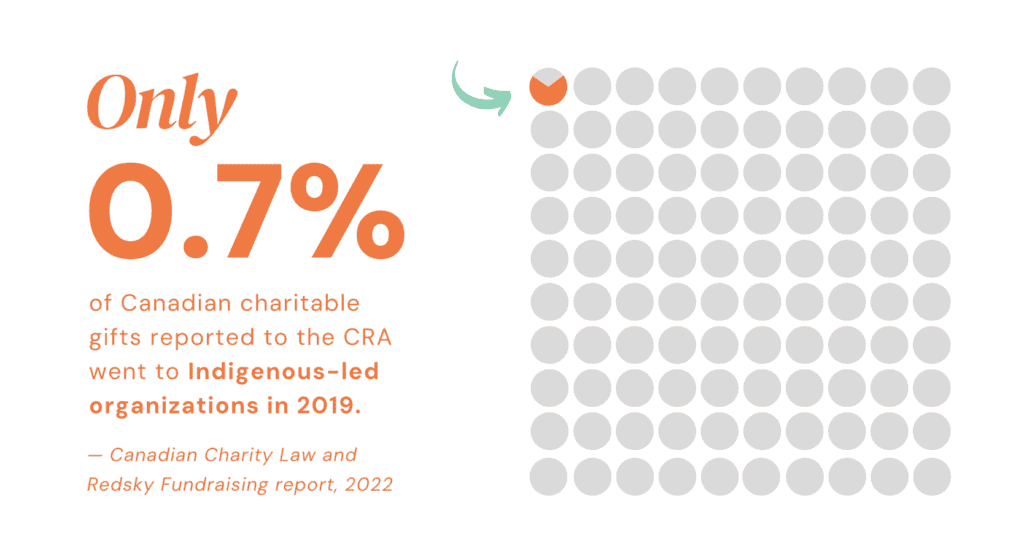
If you’re able, consider donating a day’s pay to an Indigenous-led organization. Despite making up 4.9% of the population, Indigenous organizations receive just 0.07% of charitable funding in Canada.
One Day's Pay partner organizations for 2026
Stqeeye’ Learning Society
Stqeeye’ Learning Society is an Indigenous-led non-profit organization on Salt Spring Island, BC, in the traditional territory of the Quw’utsun Peoples. The Society restores and protects the waters of Xwaaqw’um while revitalizing Indigenous knowledge, culture, and stewardship through land-based learning. Guided by Elders, Knowledge Keepers, descendants, and Youth, it strengthens Indigenous self-determination and nurtures lasting relationships with the land and waters.
Clan Mothers Healing Village
The Clan Mothers Healing Village and Knowledge Centre was created from Indigenous ways of healing, guided by the wisdom of our matrilineal traditions. For over 20 years, our Elders have worked with women and youth who’ve faced sexual abuse. They saw the problem growing—and knew we had to act.
Sacred Earth Solar
The Orange Shirt Society
A non-profit organization committed to raising awareness about the lasting impacts of the Residential School system and promoting Reconciliation through the message that
Every Child Matters. Inspired by Phyllis Webstad’s story of having her orange shirt taken away on her first day at Indian residential school.
VCF and One Day's Pay
VCF has been an advocate, partner and supporter of the One Day’s Pay campaign since the movement started five years ago, activating the campaign amongst our community and supporters. Together we have mobilized funding towards Indigenous-led non-profits and grassroots organizations. Each year, VCF donates one day’s worth of our staff’s wages to an Indigenous-led and –serving organization with sustained multi-year support.
Learn more about how we engage with the One Day’s Pay campaign as a settler-led philanthropic organization, and some suggestions for how other foundations and non-profit organizations can join the movement.
VCF's commitment to Truth and Reconciliation
At Vancity Community Foundation (VCF), we recognize that Reconciliation begins with truth. VCF recognizes that philanthropy, like most institutions in our country, is a part of colonial systems that perpetuate exclusion and inequity. We are committed to acknowledging the realities of colonialism, honoring Indigenous leadership and actively working toward a more just and equitable future.
Honouring the land
and its Peoples
VCF operates on the ancestral, unceded territories of the xʷməθkʷəy̓ əm (Musqueam), Skwxwú7mesh (Squamish) and səl̓ílwətaʔ/Selilwitulh (Tsleil-Waututh) Nations, among others across British Columbia. We acknowledge that these lands were never surrendered and that our presence here is a result of colonial laws and systems that displaced Indigenous Peoples. We recognize the environmental degradation caused by colonization and its disproportionate impact on Indigenous communities.
Acknowledging historical and ongoing injustices
We confront the legacy of physical and cultural genocide, including residential schools, the Sixties Scoop and systemic violence against Indigenous women and girls. These injustices have deeply disrupted Indigenous cultures and communities. Yet, Indigenous Peoples continue to lead with resilience, preserving traditions and driving movements for justice and environmental stewardship.
Addressing wealth and
power inequities
VCF acknowledges not only the role of colonial systems—and philanthropy itself—in perpetuating exclusion and inequity, but also our own place within these structures. We are committed to shifting resources and decision-making power to Indigenous, Black and equity-deserving communities, recognizing that true Reconciliation requires economic justice.
Taking action
toward Reconciliation
We are proud members of The Circle on Philanthropy and signatories of it’s Declaration of Action for the philanthropic community. This means we are actively working to fulfill the vision of Indigenous Peoples and support the recommendations of the Truth and Reconciliation Commission, and the United Nations Declaration on the Rights of Indigenous Peoples.
VCF's commitments
- Decolonizing our practices by challenging white-dominant norms and embedding Indigenous ways of knowing.
- Collaborating with Indigenous partners to build right relations rooted in care, reciprocity and mutual respect.
- Prioritizing Indigenous-led initiatives in our funding, partnerships and advocacy.
- Embedding Reconciliation in all aspects of our work, from philanthropy and social finance to community engagement and capacity building.
We understand that Reconciliation is a complex and ongoing journey. VCF is committed to walking this path with urgency, humility and accountability.
Resources for continued learning and support
September 30th is a time to honour Survivors of residential schools, their families and communities, and to reflect on the ongoing impacts of colonialism. These days aren’t just about remembrance —they’re a call to action. Continued learning is one of the most powerful ways we can show up—not just on one day, but all year round.
Whether you’re reading the Truth and Reconciliation Commission’s 94 Calls to Action, exploring Indigenous-led organizations or learning more about the land you live on, every step helps build a more respectful and informed future. We’ve gathered a range of resources to help our community deepen our understanding and take meaningful action, together.
WAYS TO SUPPORT ORANGE SHIRT DAY
- Join the One Day’s Pay movement and donate to an Indigenous-led or –serving organization.
- Visit Orange Shirt Society’s website and read the story of Orange Shirt Day.
- Purchase official Orange Shirt merchandise, benefiting Orange Shirt Society.
- Wear orange on September 30 to show your support.
WAYS TO FURTHER YOUR LEARNING AND UNDERSTANDING
- Review the Truth and Reconciliation Commission’s 94 Calls to Action and the final report from the National Inquiry on MMIWG2S’s 231 Calls for Justice.
- Review the Philanthropic Community’s Declaration of Action.
- Visit On Canada Project’s Settlers Take Action.
- Browse resources and ideas at Orange Shirt Day Society
- Read 150 Acts of Reconciliation for the Last 150 Days of Canada’s 150.
- Deepen your understanding of the residential school system: UBC Indian Residential School History and Dialogue Centre, Royal BC Museum learning portal: Residential Schools and Reconciliation and The Orange Path.
WAYS INDIVIDUALS CAN DEMONSTRATE SOLIDARITY WITH INDIGENOUS PEOPLES
- Read One Day’s Pay and The Circle on Philanthropy’s Guide to Deeper Engagement.
- Learn more about where you live. The First Peoples’ Map can be used to view Indigenous language regions, artists and artworks, place names and community landmarks. You can hear the pronunciation of language names, greetings, places and more.
- Use your voice and energy to call for clean drinking water in Indigenous communities, by taking a moment to complete this action asking the Prime Minister to end drinking water advisories in First Nations.
- Visit the Feast House, a robust directory of Indigenous-led organizations that you can give to.
WAYS TO SUPPORT INDIGENOUS ARTS AND BUSINESSES
- Read a book written by an Indigenous author. Support local Indigenous-owned and operated bookstores like Massey Books.
- Explore Indigenous music artists like The Halluci Nation, Aysanabee, Logan Staats, Morgan Toney, Crezus, Boogey the Beat, A Tribe Called Red, DJ Shub, Jeremy Dutcher, Cris Derksen and Robbie Robertson.
- Watch an Indigenous film from the National Film Board, or check out Monkey Beach, Reservation Dogs, Rutherford Falls and Smoke Signals.
- Shop at, give to or learn more about an Indigenous-owned business, social enterprise, non-profit or charity in your community. Visit Strong Nation’s site for Indigenous books and gifts.
MENTAL WELLNESS AND CULTURAL SUPPORTS
- Hope for Wellness Help Line offers immediate mental health counselling and crisis intervention by phone or online chat. Call toll-free 1-855-242-3310 or start a confidential chat with a counsellor at hopeforwellness.ca.
- Indian Residential School Crisis Line is a national service for anyone experiencing pain or distress as a result of their residential school experience. Call toll-free 1-866-925-4419.
- Kuu-Us Crisis Line Society provides crisis services for Indigenous people across BC. Adults/Elders line is 250-723-4050, youth line is 250-723-2040, or call toll free 1-800-588-8717.
- Métis Crisis Line is a service of Métis Nation British Columbia. Call 1-833-MétisBC (1-833-638-4722).
A heartfelt thank you
We would like to express our heartfelt gratitude to The Circle on Philanthropy for their ongoing leadership, wisdom and guidance in shaping a more equitable philanthropic sector. Their work continues to inspire us to stay accountable, listen deeply and center community voices in all that we do.
Vancity Community Foundation aims to work with supporters like you to truly distribute power and build thriving communities where lives are dignified and nature is in balance. At the heart of our new strategic plan is a commitment to being community-led and prioritizing funding for those pushed into the margins – specifically Indigenous and Black communities – in all our work, including across our main areas of focus: restoring affordability, climate justice and resilience and connected communities.